That Good Old ‘Merican Music, etc.
I’m actively searching for a new radio home for “Crazy Words, Crazy Tune”—if you have suggestions or can be of assistance, please reach out! In the meantime, I thought I would add a couple of episodes to my best-of portfolio page.
First is the Rodgers and Hart quasi-special that aired on the day Richard Linklater’s film Blue Moon, starring Ethan Hawke as the brilliant, sardonic, alcoholic, gregarious, lonely, closeted Lorenz Hart, opened at Ithaca’s Cinemapolis theater. I played songs from each phase of Rodgers and Hart’s 24-year career as a team: from their early work breaking into Broadway and interpolating songs into London musicals, to their Hollywood sojourn (with its one real triumph, the 1932 masterpiece Love Me Tonight), to their peak of theatrical success in the late thirties, through to Hart’s last-ever lyric, the hilariously macabre “To Keep My Love Alive,” written for the 1943 revival of A Connecticut Yankee that had just opened on Broadway a few weeks before Hart’s death that November at the age of 48.
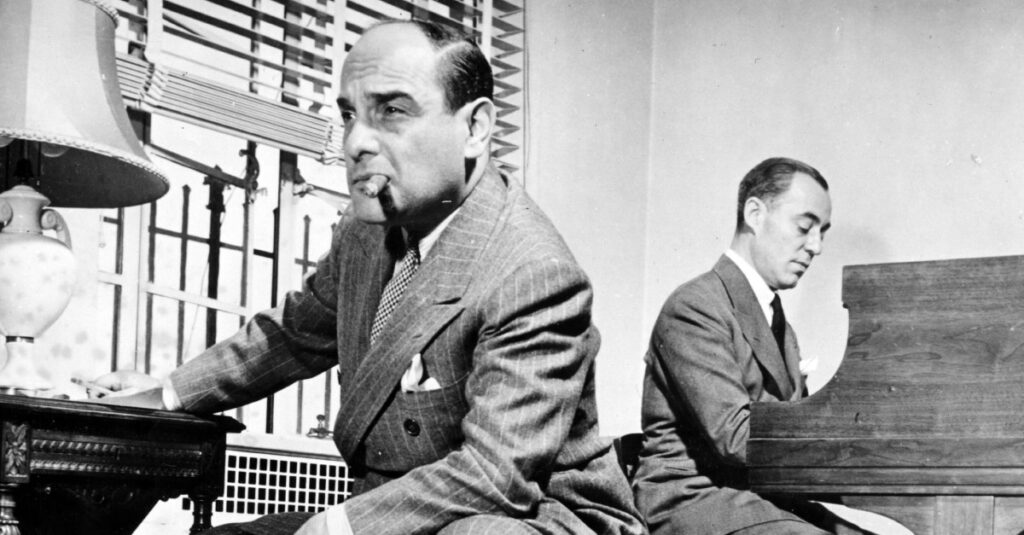
I have to admit, Rodgers and Hart are lifelong favorites of mine. Their work stands at the head of the class of the witty, rhythmic Broadway tunes from the interwar years that comprise the heart of the so-called “American popular songbook.” One phrase Richard Rodgers used to describe his partner’s lyrics was “pinwheel brilliance,” and while that characterization might sound dismissive, it carries some insight.
Larry Hart considered himself to be first and foremost a showman, or playwright. Not only did he work in close collaboration with the book writers of most of the Rodgers and Hart musicals, but the songs were deeply integral to the stories being told on stage. That integration of song and story, which we think of today as the essence of musical theater, was still in gestation during the years of Rodgers and Hart. I would summarize Hart’s contribution as the combination of two elements. First, his songs are invariably anchored in the viewpoint of the character or characters conveying them and the specific narrative moments in which they take flight. But secondly, the lyrics shine with a dazzling sophistication that designates them as crystalline, singular pieces of expression. Just as poetry has a more rarefied quality than prose, and as singing is a heightened form of speaking, that extra, “pinwheel” quality makes a Rodgers and Hart song a transcendent moment, a work of art conveyed in time.
And the wit and intelligence in these songs do not detract from their emotional power. The best of them—some of my favorites are “I Didn’t Know What Time It Was,” “You Are Too Beautiful,” and “It Never Entered My Mind”—skillfully sleeve their tenderness and pathos in a mature, literate, mordant irony.
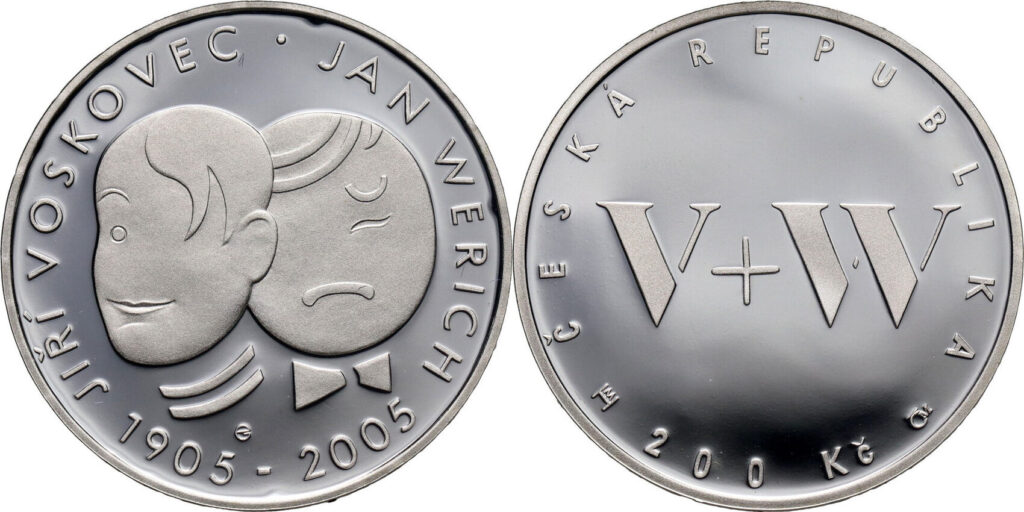
So during this special, between sets of Dick and Larry classics, I snuck in some Czech and Bulgarian recordings, including a great tune Jaroslav Jezek wrote for the stars of the Liberated Theatre of Prague, Jiři Voskovec and Jan Werich. In this century, the government of the Czech Republic saw fit to honor V+W by minting their faces on a coin. As for Jezek, I may smith some words about him on another day.
The second special you can listen to here aired about a month later—specifically, on November 28, 2025, which was one hundred years to the day that a radio program called the “WSM Barn Dance” premiered in Nashville, Tennessee. This, of course, was the program that developed into the “Grand Ole Opry,” a national institution and still very much a going concern—the longest-running program in the history of broadcasting. It so happened that my friend Robert Anthony Gibbons, a wise and gifted poet, was in town that day, so he joined me in the studio for a casually “investigative” look at the Opry and its legacy.
The Opry originated long before Nashville became a center of the country’s cultural-industrial output. Before 1925, the city’s most significant contribution to American music had been the Fisk Jubilee Singers, a vocal group organized in 1871 to raise funds for Nashville’s black college, Fisk University—itself a new institution, founded at the end of the Civil War.
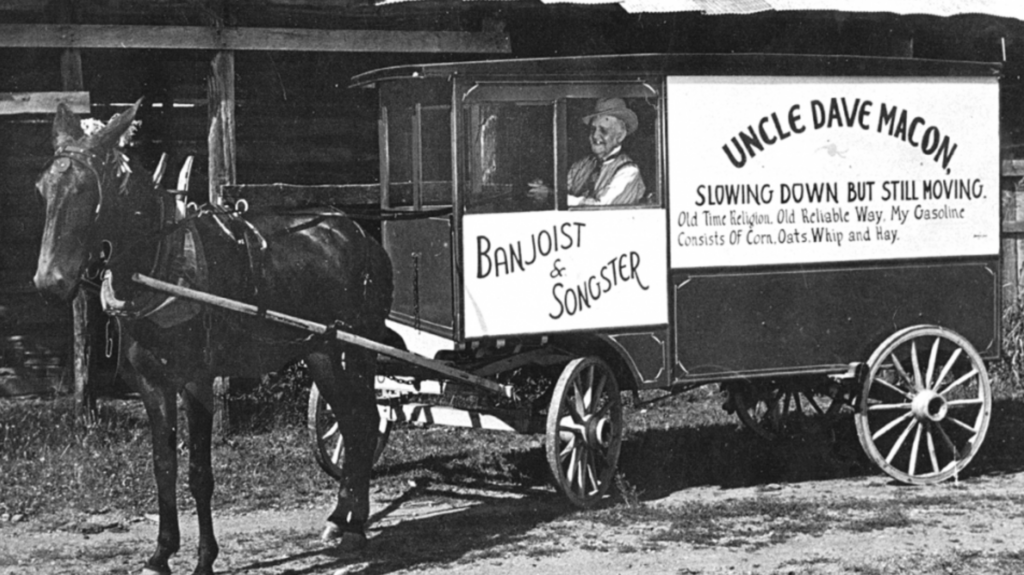
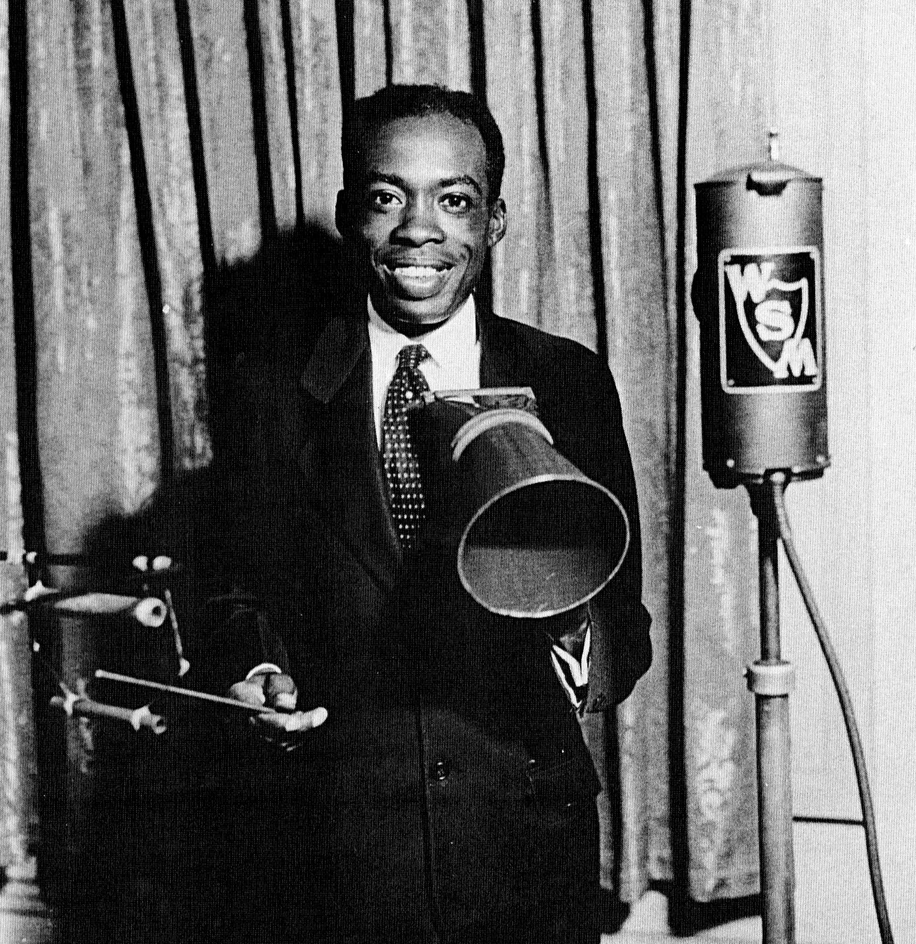
The WSM Barn Dance began as a modest effort to popularize a radio station created by an insurance company (the call letters, announcers said, stood for “We Shield Millions”) by bringing in old-time musicians from the rural hinterlands near the listening area. The inaugural broadcast that November night featured the fiddling farmer Uncle Jimmy Thompson, who was born in Smith County, Tennessee, in 1848. The other early members of the Opry were local musicians and bands such as Dr. Humphrey Bate, Uncle Dave Macon (who took the monicker “The Dixie Dewdrop”), Sid Harkreader, the Binkley Brothers’ Dixie Clodhoppers, and the show’s first black performer, the harmonica wizard DeFord Bailey.
The folk or “hillbilly” music heard on this show was notably different from the more highbrow orchestral and light-classical fare heard more customarily over the still-new wireless. One Saturday around 1928, the Barn Dance came on following a stuffy episode of NBC’s “Music Appreciation Hour” featuring the famous conductor Walter Damrosch, director of the New York Symphony Orchestra. This contrast is what prompted host George Hay, trying to make a segueway into DeFord Bailey’s harp wailing, to utter for the first time the words “Grand Ole Opry.”
Aside from Bailey, black music and musicians—despite the tradition of the Fisk Singers in Nashville and the fertile blues scene across the state in Memphis—were almost completely absent from the Opry in its first half-century on the air. After Bailey joined in 1926, the organization’s next African American inductee, Charley Pride, was not admitted until—wait for it—1993. (To be clear, Pride had been playing on the program for twenty years by that point, and delaying his induction appears to have been his choice, motivated by factors having nothing to do with racial questions.)
This glaring disconnect, Robert and I felt, is what warranted critical investigation, as opposed to a simple celebration of a historical milestone. We both believe the music itself—American music, and the music of Tennessee—is far more inclusive, cohesive, unifying than the broadcast record would suggest. So we made sure to enliven our show’s playlist with Volunteer State artists like Cannon’s Jug Stompers, Frank Stokes, Bessie Smith (born in Chattanooga), and The Two Poor Boys, Joe Evans and Arthur McClain.
I continue to agree with the assessment of one of my former radio colleagues that the most genuine, instructive divide one can make in discussing American music is not between racial categories, but between rural and urban traditions—such as that between the musicians we played on this episode and, say, the theater music of Rodgers and Hart.